
Notre histoire
IL Y A UNE HISTOIRE DERRIERE CHAQUE BULLE
1895
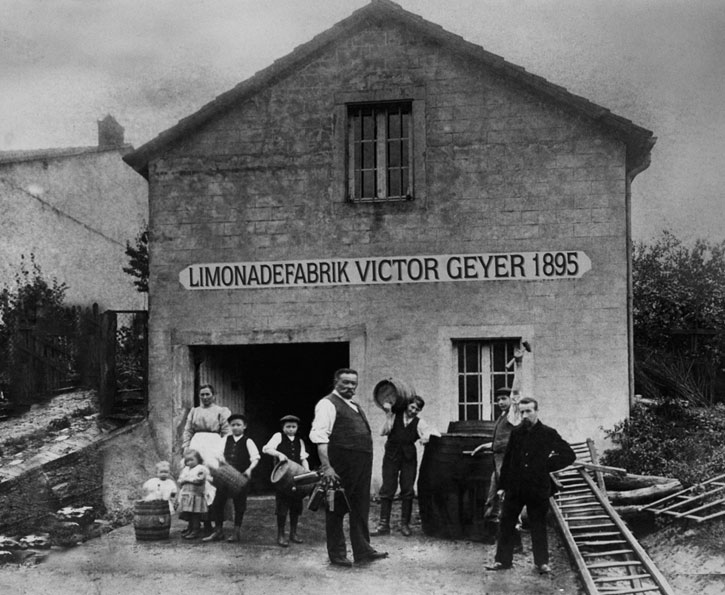
L’élixir de Victor Geyer pour étancher les soifs les plus rebelles.
C’est en 1895 que Victor Geyer installe, aux côtés des barriques de vin encombrant sa minuscule échoppe de Munster, l’étrange laboratoire d’où il espère faire éclore, à partir de formules ancestrales gardées secrètes par une poignée de familles lorraines, l’elixir capable d’étancher les soifs les plus rebelles.
Victor ne compose qu’avec des produits du terroir: d’abord cette eau patiemment purifiée par les grés des Vosges qui jaillit d’une source proche de sa petite fabrique ; du sucre de betterave, amoureusement distillé dans le village d’Erstein, une larme des meilleurs citrons récoltés à Grasse, plus quelques bulles d’un gaz dont les pins des forêts d’alentour s’abreuvent.
1895
Victor Geyer’s exquisite libation to quench the most rebellious
In 1895, Victor Geyer installed an uncanny laboratory in his tiny makeshift house in Munster, France. It is from this set up that Victor Geyer developed his exquisite libation by using heritage formulas kept secret by a small group of families in the Lorraine region.
Victor Geyer made it a point to only craft his beverage using local ingredients, from the pure water coming out of the Vosges Spring next to his house to the beet sugar made in the village of Erstein. Add to that the best harvested lemons from the city of Grasse.
This first beverage was only the beginning in a long line of masterfully crafted beverages. In a small notebook, the talented Artisan Limonadier would keep all the secrets of various recipes that he would pass on to his sons. The next generation of Geyer then used these recipes to create a gigantic collection of festive drinks.
1895
Victor Geyer’s exquisite libation to quench the most rebellious
In 1895, Victor Geyer installed an uncanny laboratory in his tiny makeshift house in Munster, France. It is from this set up that Victor Geyer developed his exquisite libation by using heritage formulas kept secret by a small group of families in the Lorraine region.
Victor Geyer made it a point to only craft his beverage using local ingredients, from the pure water coming out of the Vosges Spring next to his house to the beet sugar made in the village of Erstein. Add to that the best harvested lemons from the city of Grasse.
This first beverage was only the beginning in a long line of masterfully crafted beverages. In a small notebook, the talented Artisan Limonadier would keep all the secrets of various recipes that he would pass on to his sons. The next generation of Geyer then used these recipes to create a gigantic collection of festive drinks.
1900
First deliveries and engraved glass bottles
It is around 1900 that Mr Geyer introduced his engraved bottles topped by a mechanical top closing.
This elegant closing was an innovation in preserving the carbonation level of beverages and for months Victor Geyer was the only one to adopt it for his beverages.
The closing enable the few employees of the “Geyer Limonaderie” to Manufacture and bottle beverages then store them for the winter months.
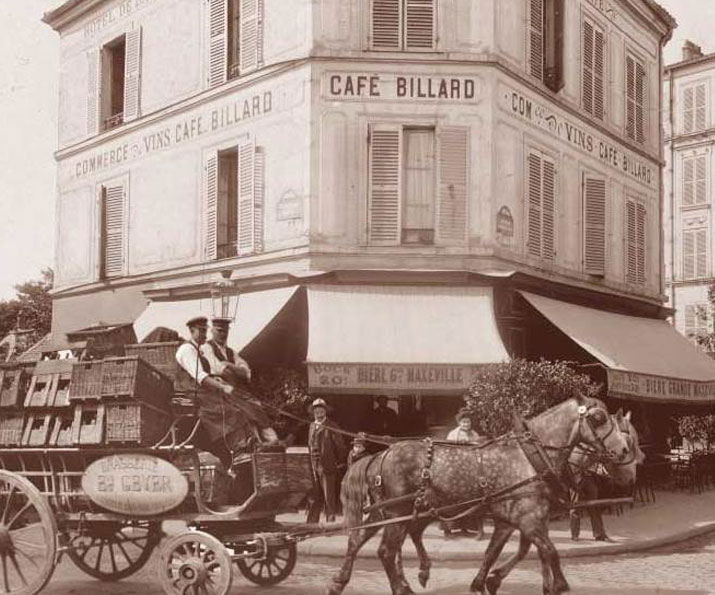
At the beginning of Spring, before the first heat waves, Victor Geyer’s rolling cart would make stops at all the local farms.
1900
First deliveries and engraved glass bottles
It is around 1900 that Mr Geyer introduced his engraved bottles topped by a mechanical top closing.
This elegant closing was an innovation in preserving the carbonation level of beverages and for months Victor Geyer was the only one to adopt it for his beverages.
The closing enable the few employees of the “Geyer Limonaderie” to Manufacture and bottle beverages then store them for the winter months.
At the beginning of Spring, before the first heat waves, Victor Geyer’s rolling cart would make stops at all the local farms.
1900
Premières livraisons, premiers flacons de verre gravé.
Premiers flacons de verre gravé, que Maître Geyer choisit de couronner d’un petit bouchon mécanique. Une élégante capsule miracle qui, remplaçant l’antique bille de verre des anciennes bouteilles de limonade, est seule à savoir, pendant des mois, domestiquer l’effervescence des limonades de Victor Geyer.
Au début du printemps, avant que les premières chaleurs n’arrivent, la charrette de Maître Geyer fait le tour des fermes.
1929
Tout se transforme, mais rien ne change
Au décès de Victor en 1924, Victor Junior et Ernest Geyer reprennent le flambeau, tandis que leur frère Auguste part bourlinguer les mers et affirmer ses talents de médecin à bord des vaisseaux de la Royale.
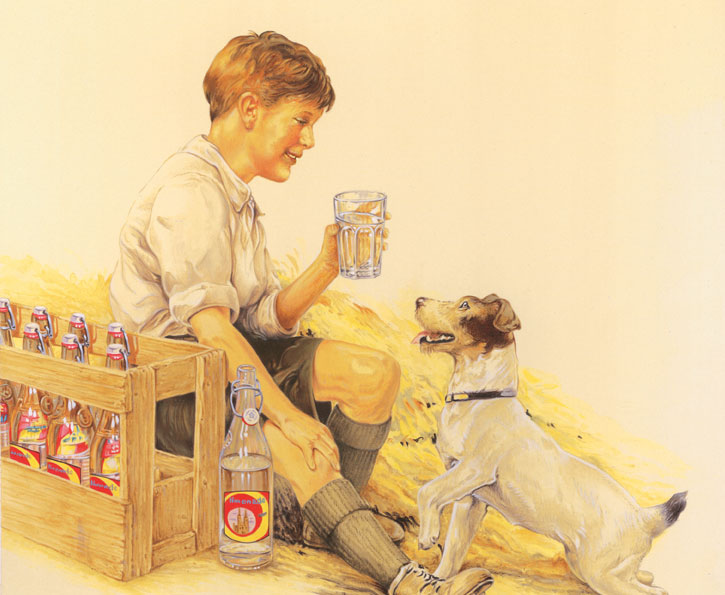
Ancienne boisson de labeur, la limonade artisanale prend alors des airs de fête ; pour mieux régaler les enfants, les fils de Victor y ajoutent de nouveaux fruits. Ainsi faut-il à présent produire mais aussi livrer tout au long de l’année, pour être capable de réjouir foires, noces et banquets mais, surtout, pour approvisionner le traîneau Saint Nicolas.
1929
Conquering the Youth’s Taste buds
Kids from Lorraine used to have to hide to try to taste Mr. Geyer’s beverages in his Cellar. Now the beverages were made widely available to the public. Lorina could now be seen among the youth and adults celebrating in Village gatherings.
The beverage that used to be mainly for hardworking farmers was now a delicious drink enjoyable year round in Dinners, parties, banquets & weddings. Victor Geyer’s sons also made sure to add new fruit flavors to satisfy the taste buds of its youngest fans.
1929
Conquering the Youth’s Taste buds
Kids from Lorraine used to have to hide to try to taste Mr. Geyer’s beverages in his Cellar. Now the beverages were made widely available to the public. Lorina could now be seen among the youth and adults celebrating in Village gatherings.
The beverage that used to be mainly for hardworking farmers was now a delicious drink enjoyable year round in Dinners, parties, banquets & weddings. Victor Geyer’s sons also made sure to add new fruit flavors to satisfy the taste buds of its youngest fans.
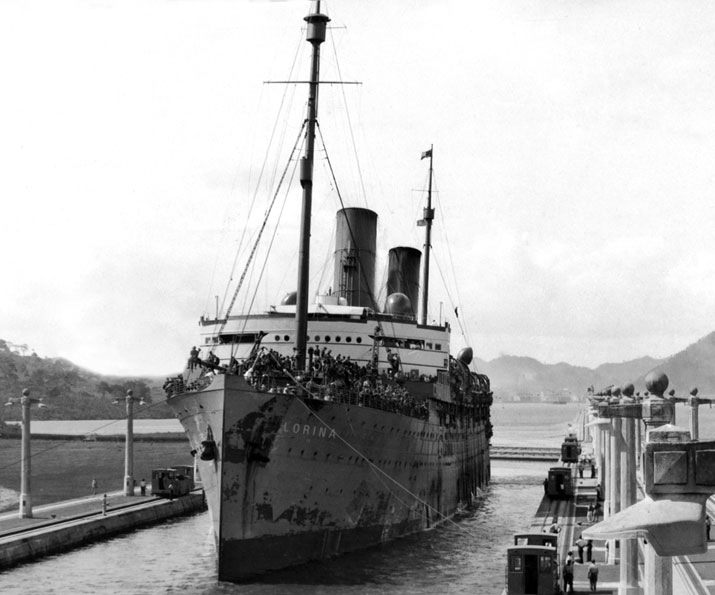
1946
From Geyer Freres to Lorina, The birth of a brand.
Post war, a Peaceful France gets back to work. Selling & bartering.
Victor Geyer’s Grandson Auguste was a marine. He came up with the idea to name the Limonade :”Lorina” in honor of the Boat that helped saved thousands of british soldiers’ lives in 1940 Dunkirk’s beach battle.
The name Lorina was perfect because it sounded similar to the “Lorraine” region and celebrated the heroes who sacrificed their lives to free Europe during WWII.
Victor & Ernest were cautious at first with using the new brand name. Only putting it on the doors of their factory truck in a small blue print. Fairly quickly the name “Lorina” became more visible on labels. Traditions being sacred in Lorraine, to this day, the Mechanical top glass bottles are engraved with a drawing of Munster’s iconic village church.